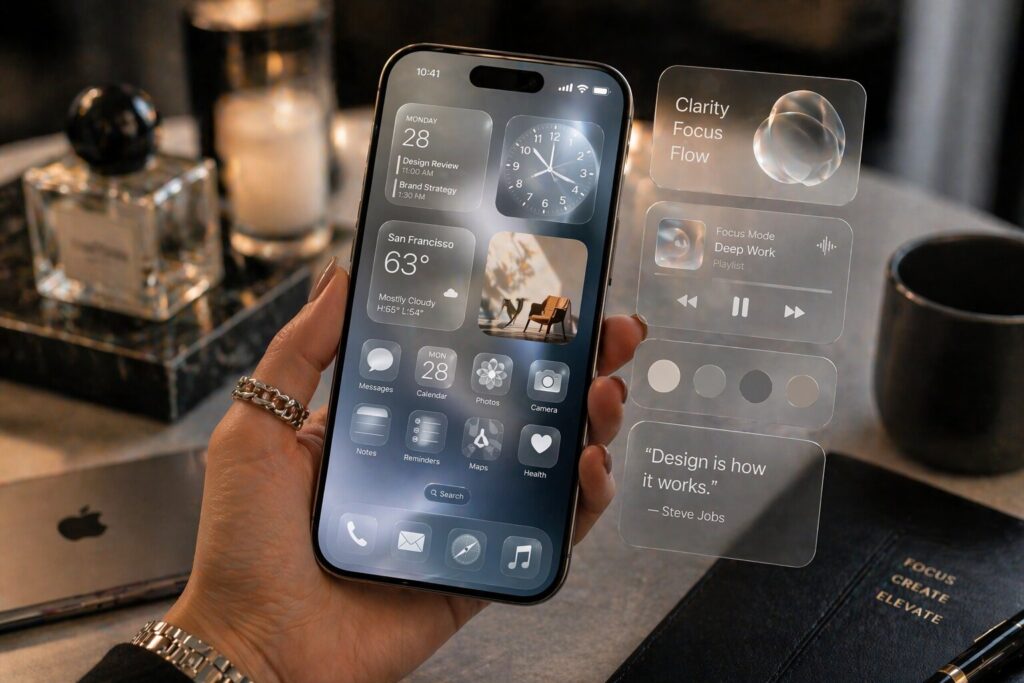
Liquid Glass UI is reshaping personal branding in 2026 by turning the smartphone interface into a visible extension of identity and style. The new design language encourages users to curate their screens with the same intention they apply to clothing and physical presentation.
Liquid Glass UI is a design system introduced in iOS 26.4.1 that uses translucent layers, fluid motion, and reflective surfaces to create a sleek, glass-like interface. It emphasizes clarity, depth, and minimal visual noise while maintaining a dynamic, responsive feel.
The rollout from Apple Inc. has sparked a surge in what lifestyle editors call “UI aesthetic curation.” As a result, home screens now function as digital style statements, reflecting a broader shift toward minimalist yet expressive personal branding.
What Is Liquid Glass UI?
Liquid Glass UI represents a shift in how digital interfaces look and feel. Instead of flat icons and rigid layouts, it introduces layered transparency and motion-based interaction.
The design relies on subtle gradients, blurred backgrounds, and fluid transitions between apps. Because of this, the interface feels more organic and less mechanical.
Users experience depth and movement as part of everyday interactions. This creates a sense of continuity across the system rather than isolated screens.
As a result, the interface itself becomes a visual environment, not just a tool.
Why Is Liquid Glass UI Influencing Personal Branding?
The rise of Liquid Glass UI affects personal branding because people increasingly treat their devices as public-facing objects. Screens appear in photos, videos, and social media content.
Because of this visibility, users now curate their home screens with intention. They select wallpapers, widgets, and app layouts that reflect a cohesive aesthetic.
Research from the Pew Research Center shows that digital environments shape how individuals present identity online. As a result, customization becomes a form of self-expression.
The interface no longer sits in the background. Instead, it plays an active role in how people present themselves.
What Is “UI Aesthetic Curation”?
UI aesthetic curation refers to the practice of designing a smartphone interface with a consistent visual identity. Users align colors, typography, and layout to create a unified look.
This trend extends beyond simple customization. It involves intentional design choices that mirror broader lifestyle aesthetics.
Common elements include:
- Matching wallpapers and widgets to create a cohesive color palette. Users often choose soft gradients or muted tones that align with the Liquid Glass aesthetic.
- Organizing apps into clean, minimal layouts that reduce visual clutter. This approach emphasizes clarity and balance.
- Using icon packs or shortcuts to maintain consistency across the interface. These adjustments create a polished, editorial look.
These practices turn the phone into a curated visual object.
How Does This Connect to Digital Minimalism?
Liquid Glass UI builds on the principles of digital minimalism, which focuses on reducing clutter and improving intentional use of technology.
However, the current trend adds a visual layer. It is not only about using fewer apps but also about presenting them in a refined way.
Because of this, digital minimalism evolves into a design-focused practice. Users remove unnecessary elements while enhancing aesthetic quality.
This shift mirrors broader lifestyle trends where simplicity and visual coherence signal control and clarity.
Why Are Users Treating Their Phones Like Fashion?
Smartphones now function as accessories that people display regularly. They appear in social media posts, work settings, and public spaces.
Because of this, users approach their interfaces the same way they approach clothing. They consider color coordination, style consistency, and overall impression.
According to Harvard Business Review, personal branding increasingly includes digital touchpoints. As a result, the phone becomes part of a broader identity system.
This perspective explains why interface design now carries cultural weight.
How Social Media Amplifies UI Trends
Social platforms accelerate the spread of UI aesthetic trends. Users share screenshots, tutorials, and setup guides, creating a feedback loop.
The TikTok community plays a major role in this process. Short videos showcase before-and-after transformations, making the trend easy to replicate.
Because of this visibility, certain layouts and styles quickly become recognizable patterns. However, platform dynamics also influence how users engage with visual content. As explored in Pinterest Ads are Killing Consumer Interest, shifts in user behavior show that overly commercialized visuals can reduce engagement, which makes authentic and curated UI aesthetics more appealing.
This dynamic turns UI design into a participatory trend rather than a static feature.
What This Trend Reveals About Personal Branding in 2026
The rise of Liquid Glass UI highlights a broader shift in how people define personal branding. Identity now extends across both physical and digital spaces.
Users no longer separate their online presence from their everyday life. Instead, they integrate design, behavior, and presentation into a single narrative.
Personal branding increasingly reflects deeper narratives of identity and transformation, similar to how public figures reshape perception over time, as seen in The Deadshot Story That Pushed Jason Mewes to Recover.
This trend also reflects a desire for control. In a fast-moving digital environment, curated interfaces provide a sense of order and clarity.
For those exploring similar shifts in digital identity, this breakdown of evolving online aesthetics offers additional insight: /related-article-slug
The Future of Interface as Identity
Interface design continues to move closer to personal expression. Systems like Liquid Glass UI provide the tools, but users shape the outcome.
Because of this, the boundary between technology and lifestyle becomes less defined. Devices function as both tools and identity markers.
As design systems evolve, personalization will likely remain central. Users will continue to adapt interfaces to reflect their preferences and values.
Conclusion
Liquid Glass UI is influencing personal branding in 2026 by transforming the smartphone interface into a curated visual identity. The emphasis on transparency, fluidity, and minimalism aligns with broader lifestyle trends.
As users treat their devices as extensions of themselves, interface design becomes part of everyday expression. The shift shows how technology and identity now move together.
Frequently Asked Questions
What is Liquid Glass UI?
Liquid Glass UI is a design system in iOS 26.4.1 that uses transparency, motion, and layered visuals to create a fluid, modern interface.
Why does UI design affect personal branding?
UI design affects personal branding because digital interfaces are visible in daily life and social media, making them part of how people present themselves.
What is UI aesthetic curation?
UI aesthetic curation is the practice of customizing a device’s interface to create a cohesive and visually appealing design that reflects personal style.
External Sources: