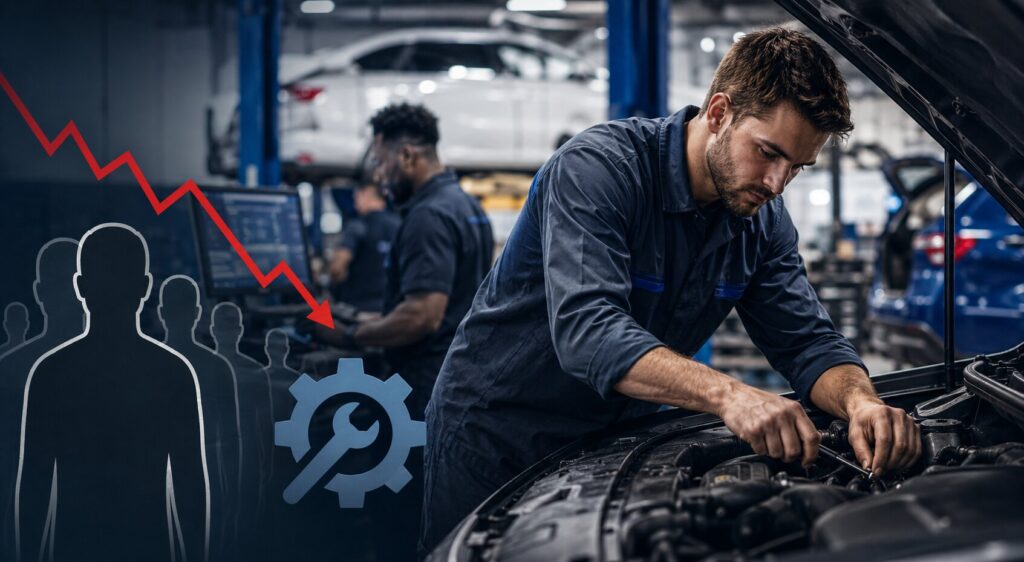
The skilled technician shortage is no longer a future concern. In 2026, it has become one of the most pressing challenges facing dealerships, service centers, and industries that rely on highly trained technical workers.
As vehicles, machinery, and essential equipment become increasingly sophisticated, the demand for skilled technicians continues to grow. At the same time, many employers are struggling to recruit, train, and retain qualified workers fast enough to meet customer needs.
For dealers, the consequences are becoming impossible to ignore. Longer service wait times, reduced shop capacity, and increased pressure on existing staff are creating operational challenges that affect both profitability and customer satisfaction.
Below, we explore why the skilled technician shortage is intensifying and what it means for dealers, workers, and the broader economy.
What Is Causing the Skilled Technician Shortage?
Several factors are contributing to the growing shortage of skilled technicians.
One major issue is workforce demographics. Many experienced technicians are reaching retirement age, creating a significant gap in institutional knowledge and workforce capacity.
At the same time, fewer young workers are entering skilled trades compared to previous generations. For years, many students were encouraged to pursue traditional four-year college paths, often at the expense of vocational and technical career programs.
As a result, the pipeline of new technicians has struggled to keep pace with industry demand.
Why Are Dealers Feeling the Impact So Strongly?
Dealerships depend heavily on service departments for revenue generation and customer retention.
When technician positions remain unfilled, service capacity declines. Fewer technicians mean fewer repairs, inspections, maintenance appointments, and warranty services can be completed each day.
This creates longer wait times for customers and additional stress for existing staff members who must manage heavier workloads.
As vehicle ownership periods continue to increase, the need for maintenance and repair services grows, making technician shortages even more problematic for dealerships.
Industry organizations are increasingly warning that technician shortages are limiting service capacity and creating operational challenges for dealerships across North America. Insights shared by NADA Marketing highlight how technician recruitment and retention have become critical priorities as service demand continues to rise.
Source: NADA Headlines https://marketing.nada.org/acton/rif/4712/s-3a14-2606:0/-/l-0eb8:aeb/l-0eb8/showPreparedMessage?sid=TV2:u98AWu7rH
How Are Modern Vehicles Increasing Demand for Skilled Workers?
Today’s vehicles are significantly more complex than those of previous decades.
Advanced driver-assistance systems, electric powertrains, software integrations, connectivity features, and sophisticated diagnostics require technicians to possess a wider range of skills than ever before.
Repairing modern vehicles often involves both mechanical expertise and advanced technological knowledge.
According to National Institute for Automotive Service Excellence, ongoing training and certification have become increasingly important as vehicle technology continues evolving.
This growing complexity is increasing the demand for highly skilled professionals who can work confidently with both hardware and software systems.
Why Is Recruiting Technicians Becoming More Difficult?
Competition for qualified technicians has intensified dramatically.
Dealers are not only competing with one another but also with independent repair shops, fleet operators, equipment manufacturers, transportation companies, and industrial employers seeking similar skill sets.
In many markets, experienced technicians can choose from multiple employment opportunities, making recruitment more challenging.
Employers are increasingly offering competitive compensation packages, signing bonuses, training support, and career advancement opportunities to attract talent.
Despite these efforts, many organizations still report difficulty filling open positions.
How Does Shortage Affect Customers?
Customers often experience the technician shortage through service delays.
When shops lack sufficient staffing, appointments may be scheduled weeks or even months into the future. Repairs can take longer to complete, especially when complex diagnostics are involved.
Longer wait times can negatively affect customer satisfaction and loyalty, particularly when transportation is essential for daily life and work.
For dealerships, maintaining service quality while managing staffing shortages has become a critical operational priority.
You Might Also Like Car Marketing: Smart Digital Strategies to Increase Sales
Why Is Training Becoming More Important?
Training is increasingly viewed as one of the most effective solutions to the technician shortage.
Rather than relying solely on recruiting experienced workers, many dealerships are investing in apprenticeship programs, mentorship initiatives, and partnerships with technical schools.
Developing talent internally allows organizations to build a pipeline of future technicians while ensuring workers receive training aligned with current technologies and service standards.
Industry experts widely agree that workforce development will play a major role in addressing long-term labor shortages.
What Role Do Technical Schools and Trade Programs Play?
Technical education programs are becoming increasingly important as employers search for qualified talent.
Many schools are expanding automotive, diesel, equipment maintenance, and advanced technology programs to help students prepare for high-demand careers.
Organizations such as SkillsUSA continue promoting skilled trades education and workforce development initiatives that connect students with industry opportunities.
These programs help introduce younger generations to career paths that offer strong earning potential and long-term stability.
Why Is Retention Just as Important as Recruitment?
Hiring new technicians is only part of the solution.
Retention has become equally important because losing experienced workers can create significant operational disruptions.
Many employers are focusing on workplace culture, professional development opportunities, flexible scheduling, and career progression pathways to improve retention rates.
Technicians who feel supported and valued are often more likely to remain with an organization long term.
This stability benefits both employers and customers by maintaining consistent service quality and expertise.
What Does the Technician Shortage Mean for the Wider Economy?
The effects extend far beyond dealerships.
Skilled technicians support transportation, logistics, construction, agriculture, manufacturing, utilities, and many other sectors that are essential to economic activity.
When technician shortages limit maintenance and repair capacity, productivity can be affected across multiple industries.
As equipment and vehicles become more technologically advanced, the importance of maintaining a highly skilled technical workforce will continue growing.
Can the Industry Solve the Technician Shortage?
While there is no quick fix, many industry leaders believe the situation can improve through sustained investment in recruitment, education, and workforce development.
Building awareness about skilled trade careers, strengthening technical education pathways, and creating attractive long-term career opportunities will be critical.
Organizations that successfully recruit, train, and retain technicians will be better positioned to meet rising service demand and support future growth.
Also Read Boost Fixed Operations in Dealerships for Growth
FAQ Section
What is the skilled technician shortage?
It refers to the growing gap between employer demand for skilled technical workers and the available supply of qualified professionals.
Why are dealerships struggling to hire technicians?
Many dealerships face competition for talent while also dealing with an aging workforce and a limited pipeline of new technicians.
How are modern vehicles affecting technician demand?
Advanced vehicle technologies require specialized skills and ongoing training, increasing the need for qualified technicians.
What can employers do to address the shortage?
Employers can invest in training programs, apprenticeships, career development opportunities, and retention initiatives.
Conclusion
The skilled technician shortage has become a critical challenge for dealerships and industries across the economy. As vehicles and equipment grow more sophisticated, the need for highly trained professionals continues to rise.
Addressing this issue will require long-term commitment to recruitment, education, training, and retention. Organizations that invest in developing skilled talent today will be better prepared to meet tomorrow’s service demands and maintain the workforce needed to support an increasingly complex world.
For dealerships looking to improve technician recruitment and retention strategies, learn more at Chris Collins Technician Hiring Coaching.