Freedom often feels external.
However, this conversation reveals something deeper:
Freedom begins with permission.
In this episode of Books That Changed My Life, David Archuleta reflects on how The Alchemist reshaped his understanding of courage, identity, faith, and personal agency.
More importantly, he explains how questioning long-held beliefs transformed his life.
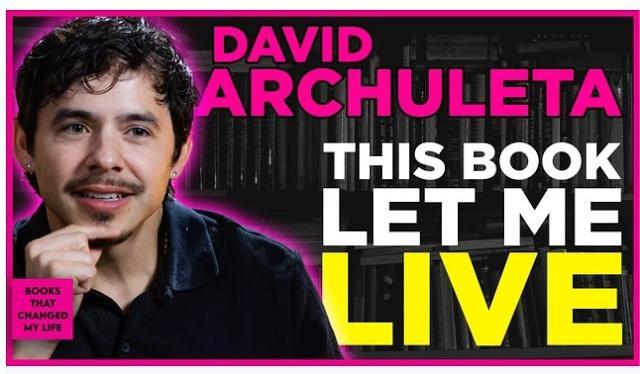
About the Guest: David Archuleta
David Archuleta rose to national attention at 17 on American Idol. At the time, he entered the spotlight with talent but without a clear sense of direction.
Although he succeeded publicly, he privately struggled with identity, religion, obedience, and self-doubt.
Later, he publicly came out as queer. That decision forced him to challenge not only public expectations, but also deeply rooted religious beliefs.
In addition, his memoir Devout explores devotion, authority, faith, and autonomy. Writing it required courage. However, it also gave him clarity.
About the Book: The Alchemist
Written by Paulo Coelho, The Alchemist follows a shepherd named Santiago who pursues his “Personal Legend.”
The novel centers on one provocative idea:
The world’s greatest lie is that we lose control of our lives and surrender to fate.
Instead, Coelho argues that we shape our destiny through courage, action, and belief.
Because of its simple language and symbolic storytelling, the book remains widely accessible while still asking profound questions.
You can explore more conversations about transformative books in the BTCML episode archive:
👉 https://booksthatchangedmylife.org/
The World’s Greatest Lie: Fate vs. Agency
One passage struck David deeply:
At a certain point in our lives, we lose control, and our lives become controlled by fate.
Growing up religious, David often believed external authority defined his path, his father, church leaders, and even God.
As a result, he credited success to divine will rather than personal action.
However, The Alchemist challenged that thinking.
Instead of surrendering to destiny, David began asking:
- What if I am writing my story?
- What if discomfort is growth?
- What if obedience is not the same as truth?
Consequently, he started reclaiming agency.
Courage as the Gateway to Freedom
Another line in the book states:
Courage is the quality most essential to understanding the language of the world.
For David, courage meant stepping beyond strict religious boundaries.
For years, he believed happiness and queerness could not coexist. Therefore, he suppressed parts of himself.
Eventually, he asked an unthinkable question:
What if happiness is still possible?
The moment he allowed that possibility, everything shifted.
Suddenly, limitation turned into exploration.
Reinvention Through Action
The novel teaches that transformation happens through action, not theory.
Similarly, David explains that growth requires movement:
- Auditioning despite fear
- Staying on stage despite self-doubt
- Writing a memoir despite backlash
- Leaving environments that limited joy
Each action purified something internal.
Just as alchemists transform lead into gold, personal struggle transforms identity into clarity.
New Perspective: Challenging Inherited Beliefs
When Belief Systems Shape Identity
Many people inherit belief systems before they can question them. As children, we accept authority as truth. Later, however, growth demands examination.
David’s story highlights a critical framework:
- Inherited Belief – “This is the only way.”
- Internal Conflict – “This doesn’t align with my experience.”
- Courageous Questioning – “What if this belief is incomplete?”
- Experiential Testing – Living differently.
- Personal Integration – Forming independent conviction.
Importantly, this process does not require rejecting everything. Instead, it requires discernment.
Common Mistake: Mistaking Discomfort for Danger
A key theme from both David’s life and The Alchemist is this:
Discomfort does not always signal danger.
Sometimes, discomfort signals expansion.
Therefore, when people mistake fear for moral failure, they shrink. However, when they examine fear, they grow.
The Soul of the World and Authentic Living
Coelho writes that when someone truly desires something, the universe conspires to help.
Although symbolic, the message is psychological.
When belief shifts internally, perception changes externally.
David describes feeling most connected when:
- He releases expectation
- He stops people-pleasing
- He creates without judgment
- He acts from curiosity
In those moments, life feels aligned.
Why This Conversation Still Matters
This episode resonates because it speaks to universal themes:
- Obedience vs. authenticity
- Fear vs. curiosity
- Fate vs. agency
- Community vs. individuality
Many readers encounter similar crossroads, especially when inherited identity clashes with lived experience.
For additional discussions about identity, courage, and personal transformation, you can explore other reflective conversations here:
👉 https://booksthatchangedmylife.org/blogs/news
You may also revisit related episodes on belief, purpose, and reinvention in the BTCML collection.
FAQ
What is the main message of The Alchemist?
The book teaches that individuals must pursue their Personal Legend through courage, action, and faith in possibility.
How did The Alchemist influence David Archuleta?
It encouraged him to question fate, challenge inherited beliefs, and claim ownership over his life decisions.
What does “the world’s greatest lie” mean?
It refers to the belief that we lose control of our destiny and become victims of circumstance.
Why is courage central to the story?
Because transformation requires stepping beyond fear and into uncertainty.
Final Thoughts
The Alchemist did not give David answers.
Instead, it permitted him.
Permission to question.
Permission to explore.
Permission to live authentically.
Ultimately, the book reinforced one essential truth:
Life expands when you step beyond the walls you were given.
And sometimes, the most powerful transformation begins with a single question.